
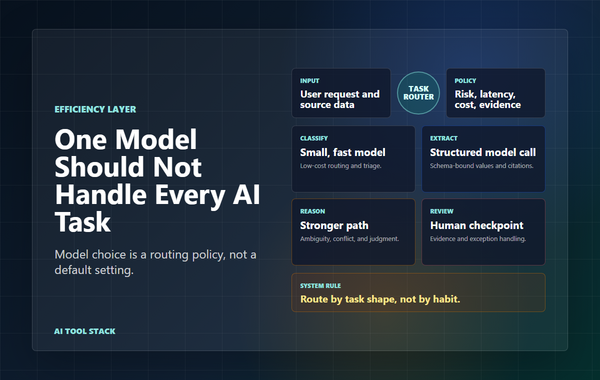
Why One Model Should Not Handle Every AI Task
Using one model for every AI task turns model choice into a hidden default. Production workflows need explicit model policies for task type, risk, latency, evidence, fallback, and evaluation.
Read more
Tag
Using one model for every AI task turns model choice into a hidden default. Production workflows need explicit model policies for task type, risk, latency, evidence, fallback, and evaluation.
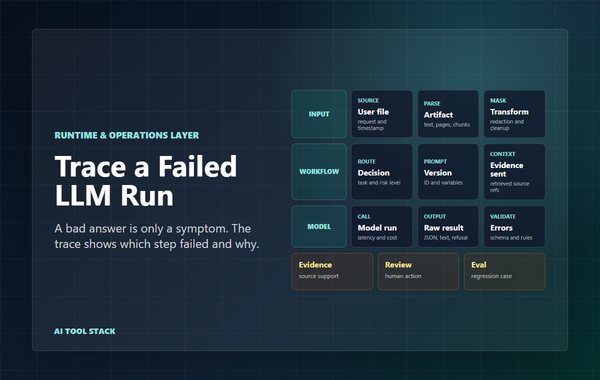
When an AI workflow fails, the final answer is not enough. You need the input, route, prompt, model, context, schema errors, evidence gaps, review action, and eval case.
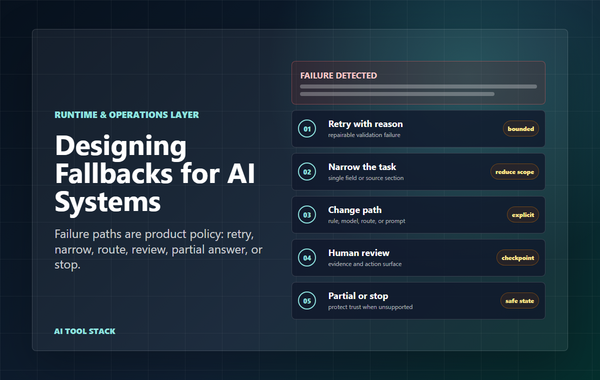
AI failures need designed paths: retry, narrower scope, simpler model, stronger model, human review, partial answer, safe message, or stop.
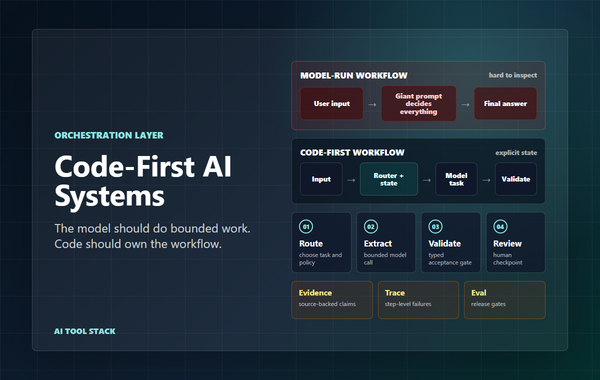
The model should classify, extract, summarize, judge, or propose. Code should own routing, state, validation, retries, evidence, review, and evaluation.
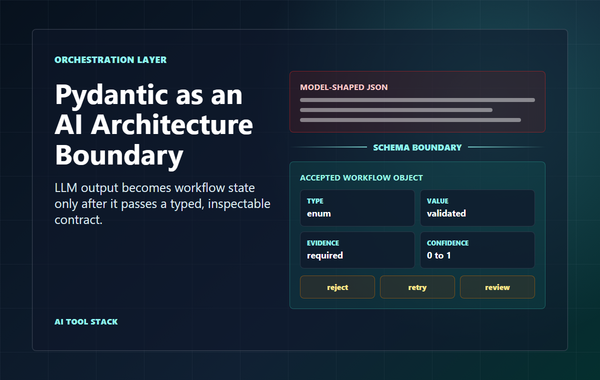
LLM output is not application state until it passes a typed boundary. Schemas, validation errors, evidence fields, and versioned contracts make AI workflows easier to inspect and change.
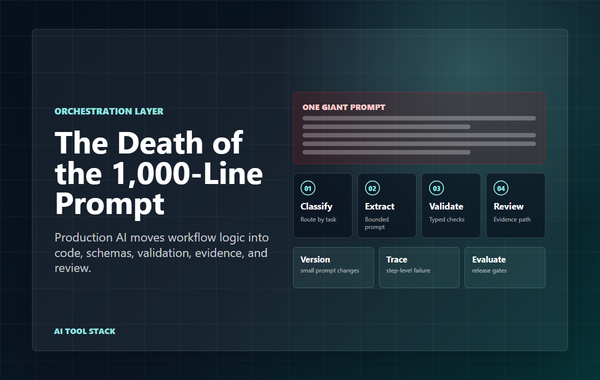
Giant prompts feel productive at demo stage. In production, workflow logic needs to move into code, schemas, routing, validation, evidence, review, and evaluation.