
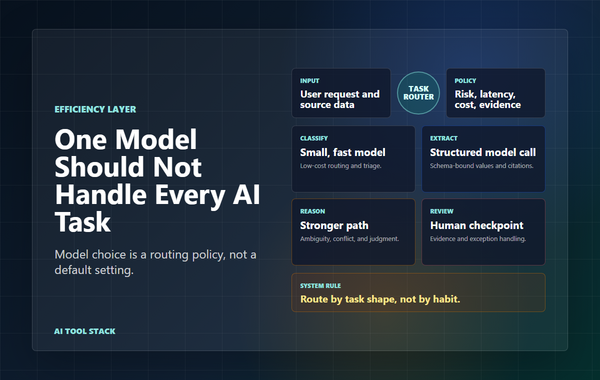
Why One Model Should Not Handle Every AI Task
Using one model for every AI task turns model choice into a hidden default. Production workflows need explicit model policies for task type, risk, latency, evidence, fallback, and evaluation.
Read more
Blog
The general blog holds the reusable ideas: foundation beliefs, system-layer patterns, decision frameworks, production lessons, and project lessons that travel beyond one build.
Essay library
These posts are the connective tissue around the projects: how to think, what to test, what usually breaks, and which system layers should exist before production pressure arrives.
Using one model for every AI task turns model choice into a hidden default. Production workflows need explicit model policies for task type, risk, latency, evidence, fallback, and evaluation.
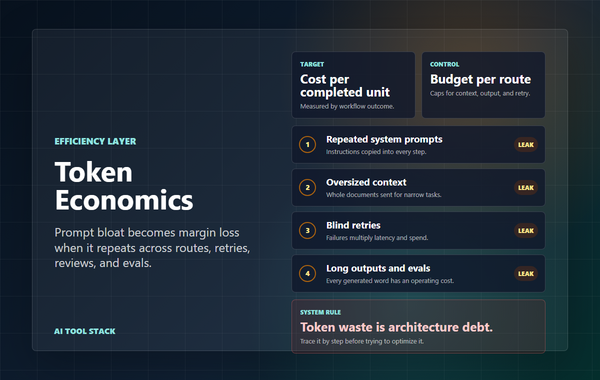
Token waste is architecture debt. Oversized prompts, broad context, verbose outputs, retries, review, and eval runs compound into the cost per trusted completed unit.
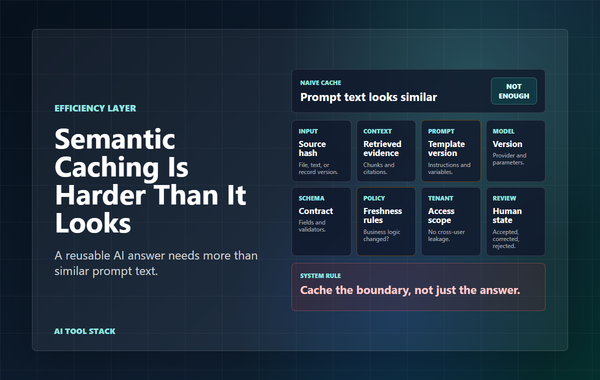
Semantic similarity measures intent, not validity. Safe AI caching needs source versions, schemas, model policy, evidence, permissions, review state, and wrong-hit tracking.
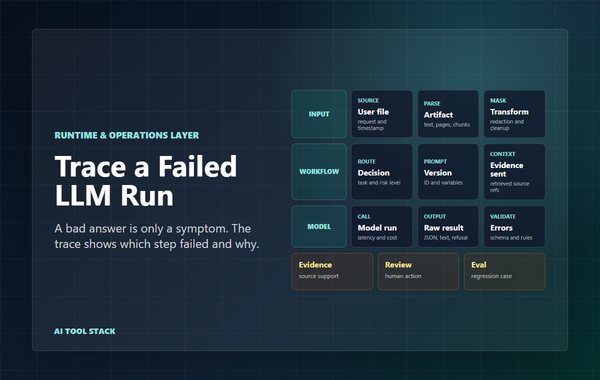
When an AI workflow fails, the final answer is not enough. You need the input, route, prompt, model, context, schema errors, evidence gaps, review action, and eval case.
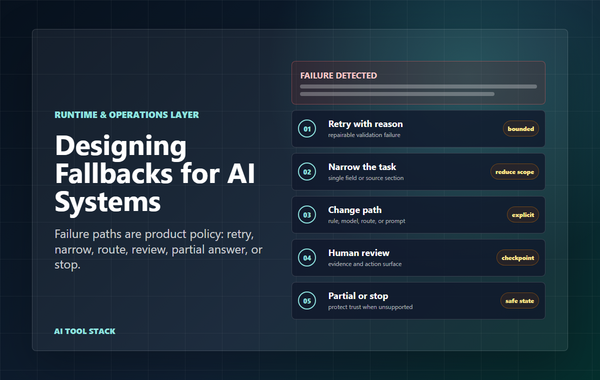
AI failures need designed paths: retry, narrower scope, simpler model, stronger model, human review, partial answer, safe message, or stop.
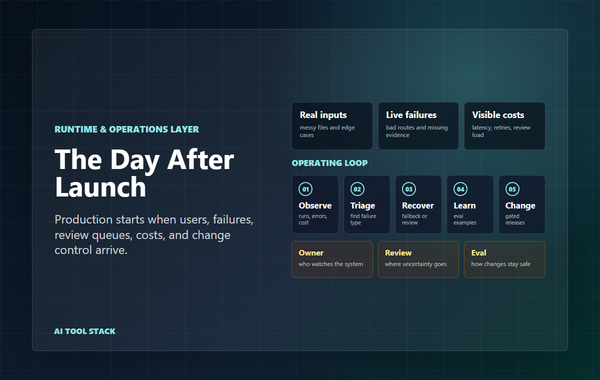
Launch is not the finish line for an AI system. It is when review queues, failures, costs, user feedback, model changes, and ownership finally become real.
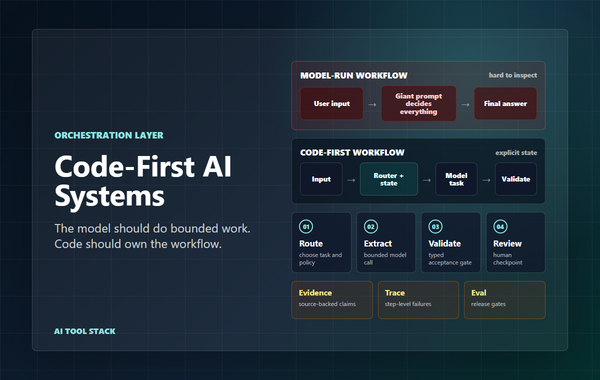
The model should classify, extract, summarize, judge, or propose. Code should own routing, state, validation, retries, evidence, review, and evaluation.
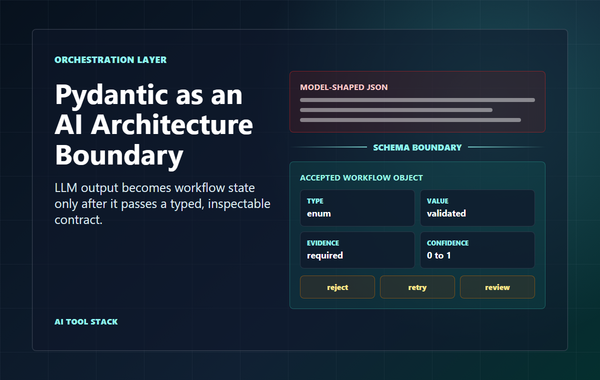
LLM output is not application state until it passes a typed boundary. Schemas, validation errors, evidence fields, and versioned contracts make AI workflows easier to inspect and change.
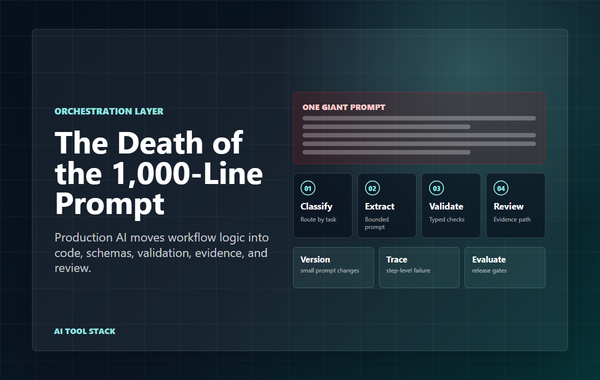
Giant prompts feel productive at demo stage. In production, workflow logic needs to move into code, schemas, routing, validation, evidence, review, and evaluation.
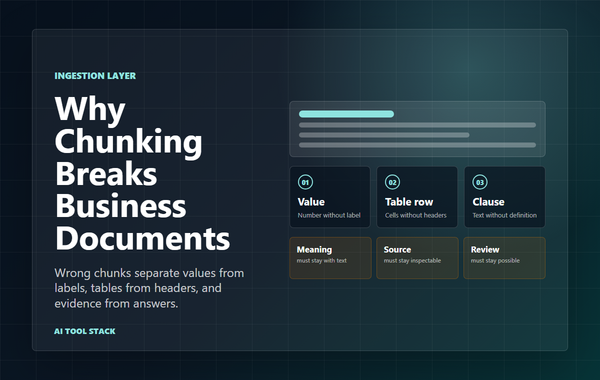
Chunking is not just a retrieval setting. In business documents, the wrong chunks can separate values from labels, tables from headers, clauses from definitions, and evidence from the answer.
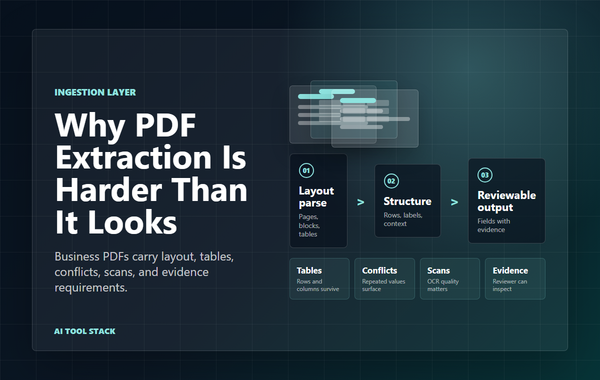
PDF extraction fails in production because business documents are not clean text. They carry layout, tables, repeated fields, scans, conflicts, and evidence requirements.
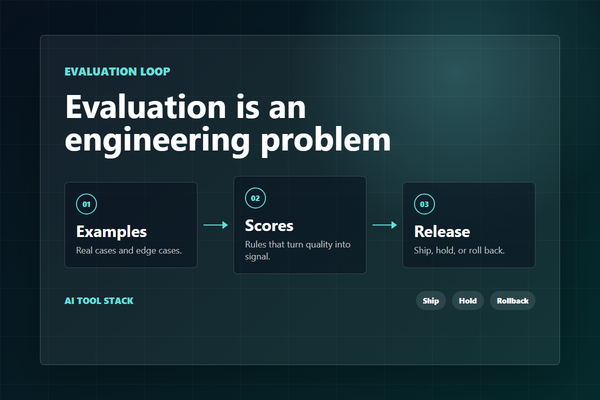
Why AI evaluation is not a report card after launch, but a design constraint from day one.