
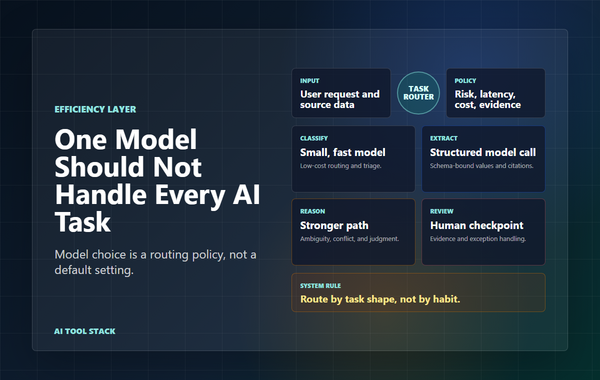
Why One Model Should Not Handle Every AI Task
Using one model for every AI task turns model choice into a hidden default. Production workflows need explicit model policies for task type, risk, latency, evidence, fallback, and evaluation.
Read more
Tag
Using one model for every AI task turns model choice into a hidden default. Production workflows need explicit model policies for task type, risk, latency, evidence, fallback, and evaluation.
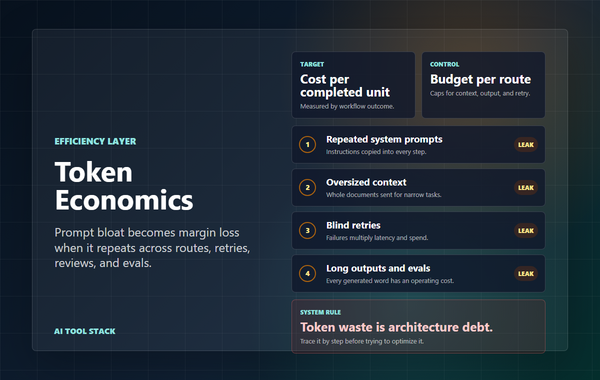
Token waste is architecture debt. Oversized prompts, broad context, verbose outputs, retries, review, and eval runs compound into the cost per trusted completed unit.
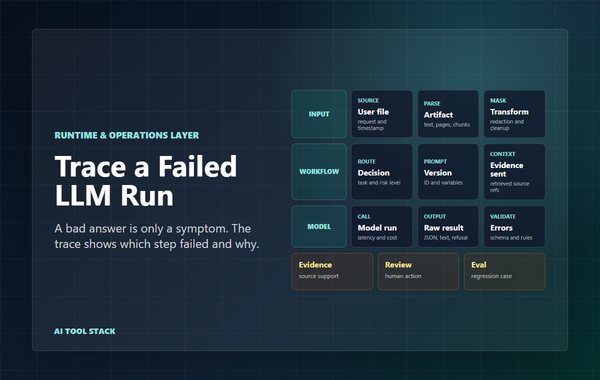
When an AI workflow fails, the final answer is not enough. You need the input, route, prompt, model, context, schema errors, evidence gaps, review action, and eval case.
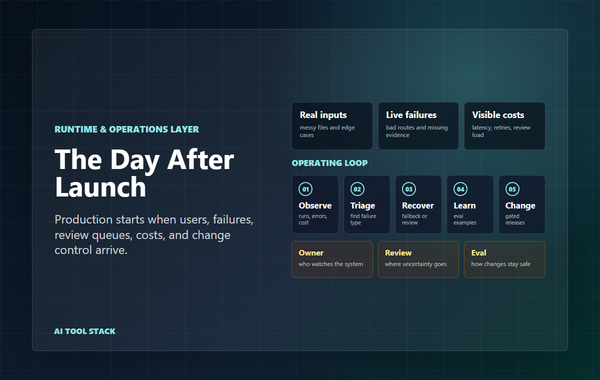
Launch is not the finish line for an AI system. It is when review queues, failures, costs, user feedback, model changes, and ownership finally become real.
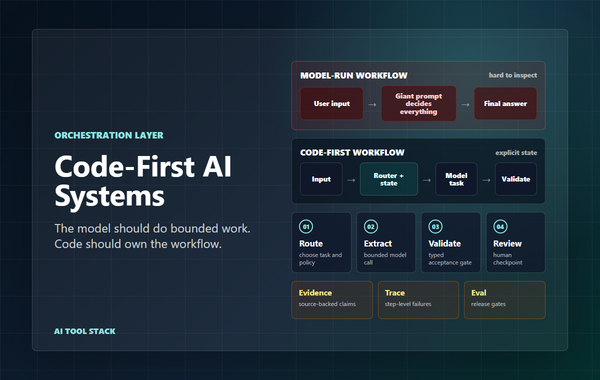
The model should classify, extract, summarize, judge, or propose. Code should own routing, state, validation, retries, evidence, review, and evaluation.
How I would evaluate PolicyTrace beyond simple accuracy: golden examples, conflict fixtures, provenance checks, review outcomes, regression gates, and operational metrics.
A production hardening roadmap for PolicyTrace: authentication, durable storage, background jobs, audit trails, evaluation, monitoring, retention, and operational ownership.
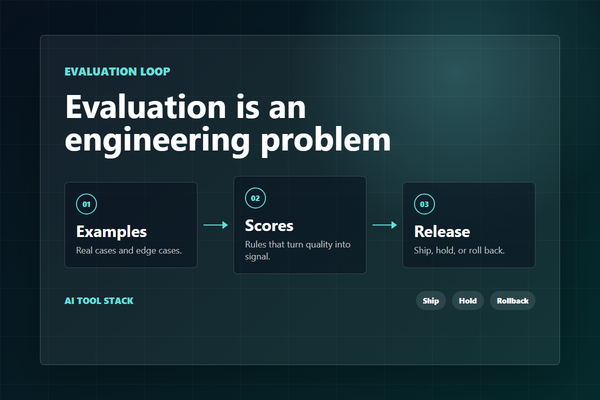
Why AI evaluation is not a report card after launch, but a design constraint from day one.
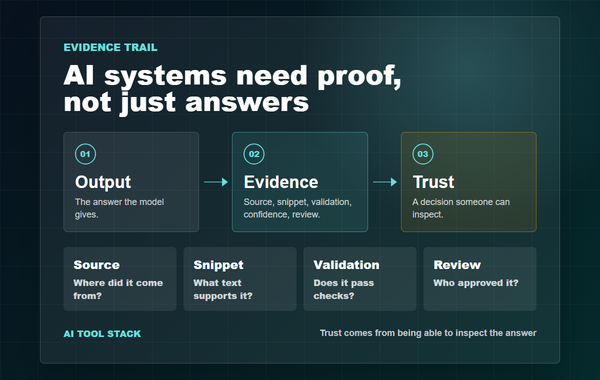
A practical framework for making AI outputs reviewable, traceable, and trustworthy in real workflows.